The State puts people in prison
for breaking the law.
But, too often, the State breaks the law in
how it treats them.
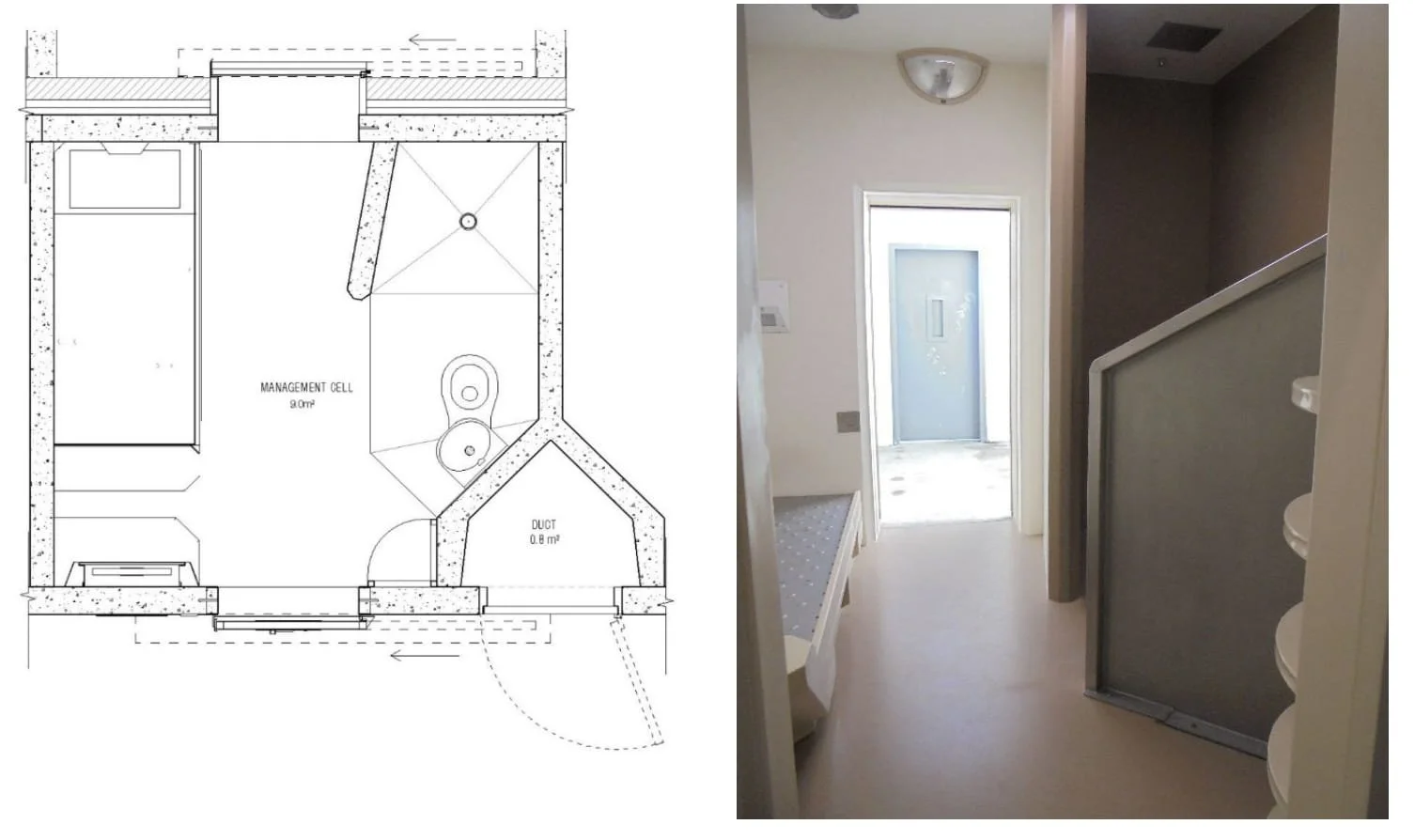
Above: a cell in the Prisoners of Risk Unit (PERU) adjoining Auckland Prison: a regime of prolonged solitary confinement that is “cruel, inhuman and degrading” (Ombudsman 2024)
Everyone deserves to be treated with fairness, humanity, and respect for our inherent dignity as human beings. This includes people in prison.
Reflecting that expectation, law does not stop at the prison gate. There are rules about how prisons should be run and people in prison should be treated. The law recognises that people in prison have legal rights that must be respected by the New Zealand State.
But, too often, the State breaches those rights — as courts and independent observers have recorded and people in prison know too well. Even basic rights, such as access to medical care, are not respected in many cases. The State systemically fails to treat people in prison with fairness, humanity, or respect for their dignity; or to respect tikanga Māori; or to uphold obligations under Te Tiriti | the Treaty.
Yet the State is determined to put more and more people behind bars. In 2025, the prison population has reached record highs. New Zealand imprisons its people at a significantly higher rate than most other countries, including Australia, Canada, and the UK. (See here for the figures).
We can—and must—do better. Find out what we are doing to stand up for the rights of prisoners and about our vision for the justice system in Aotearoa New Zealand.